
















Most Austin homeowners are quoted $8,000–$12,000 up front for a new furnace. Ours starts at $125 a month — 0% interest, and no payments for 18 months.

We size the system to your home, not to the box that's in it now. Load calculations, duct and airflow measurements, and a full system evaluation come first. You get three options in writing, with the reasoning and the financing behind each.

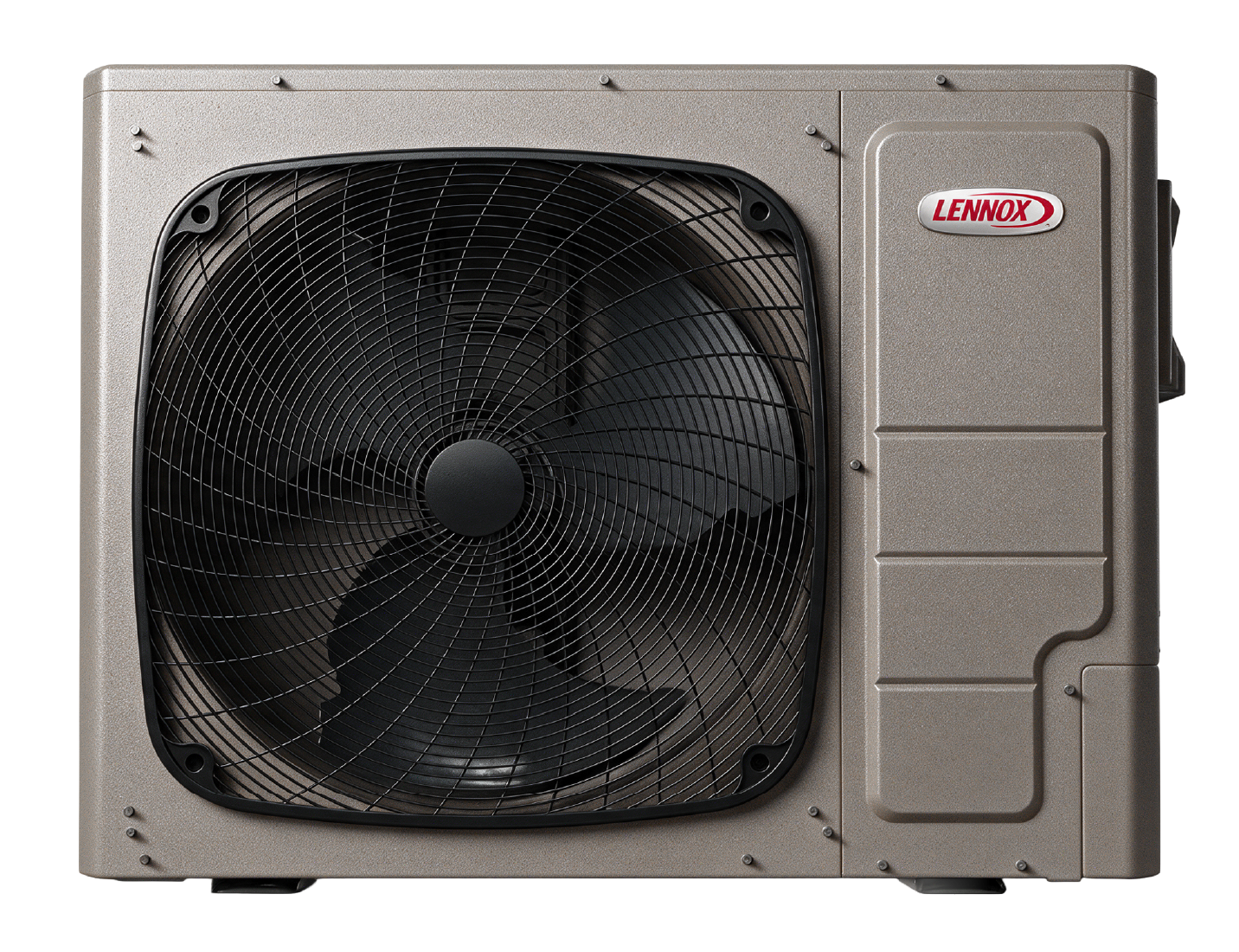
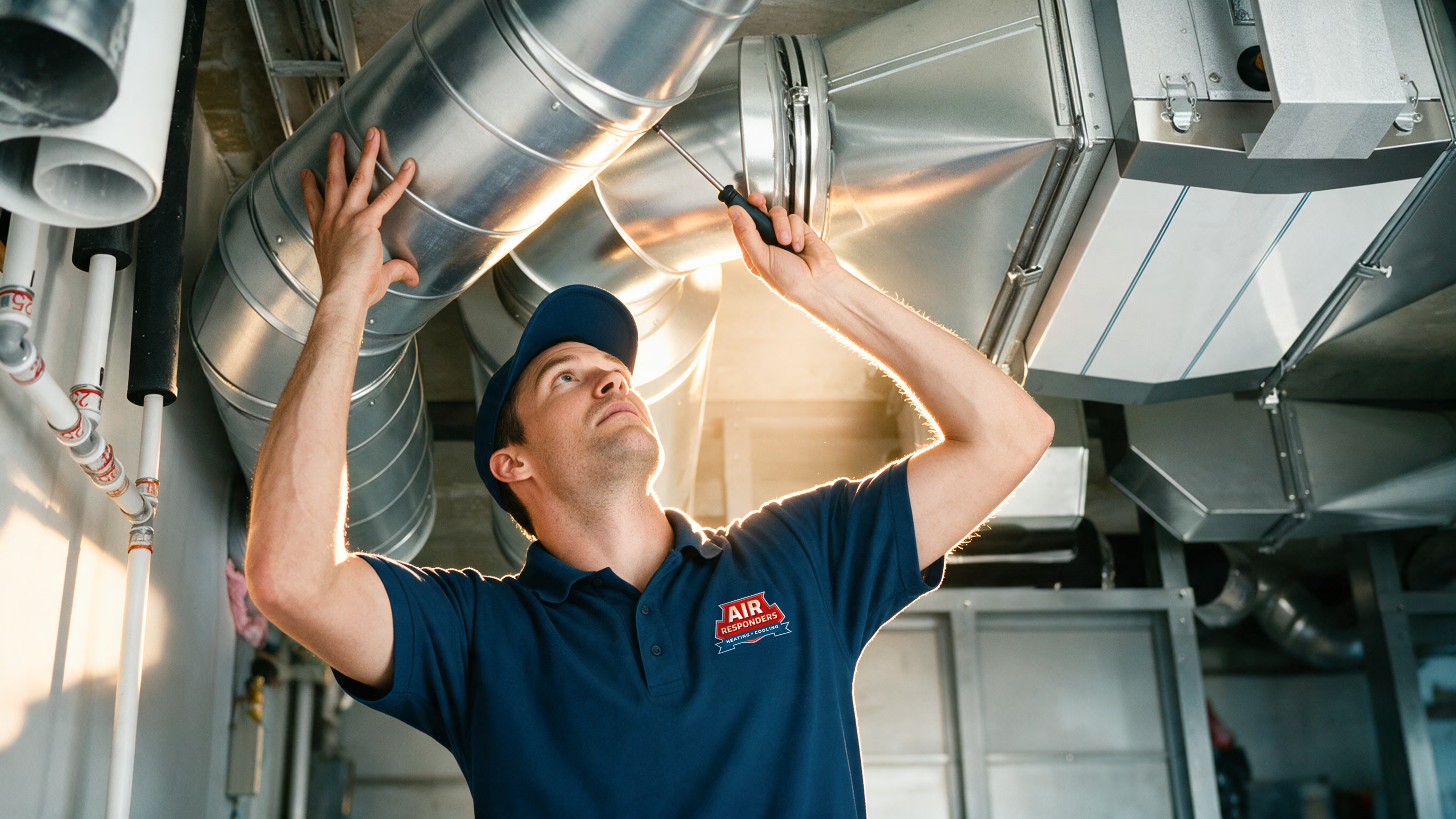
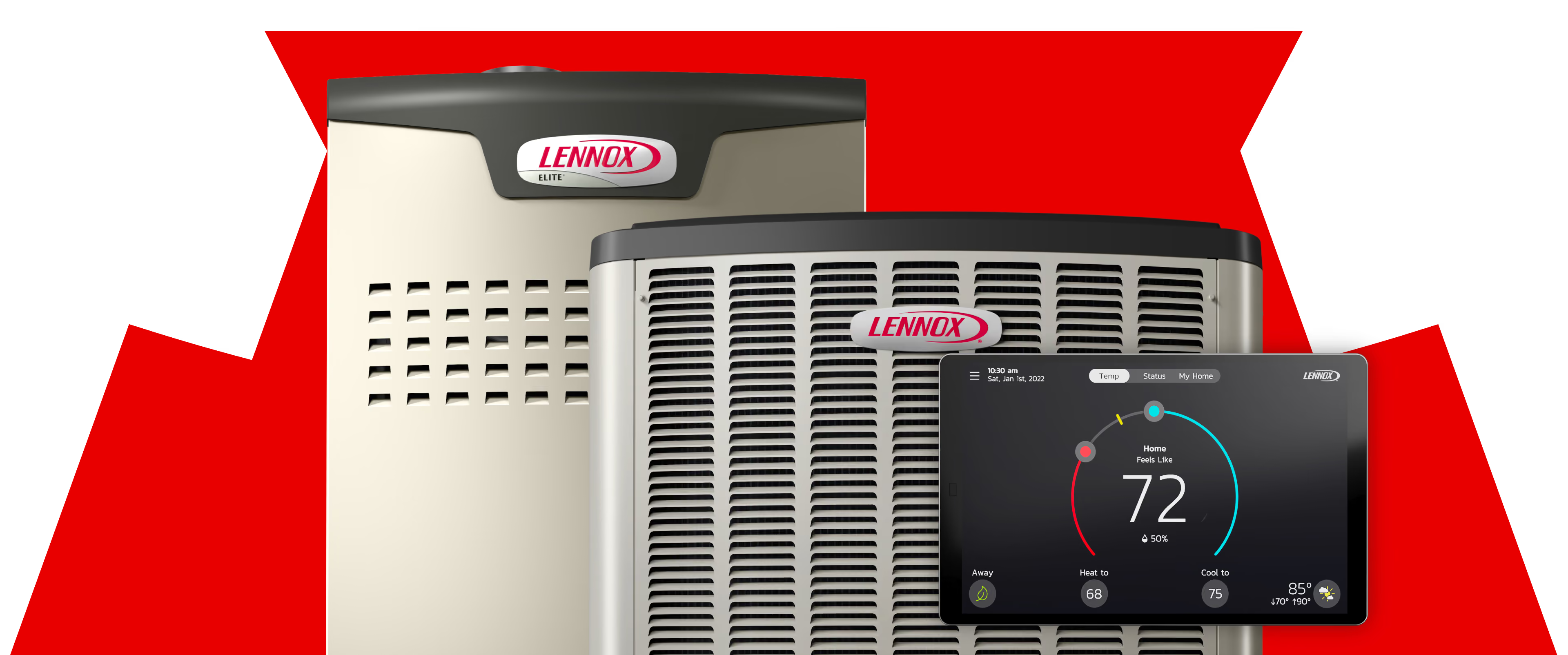
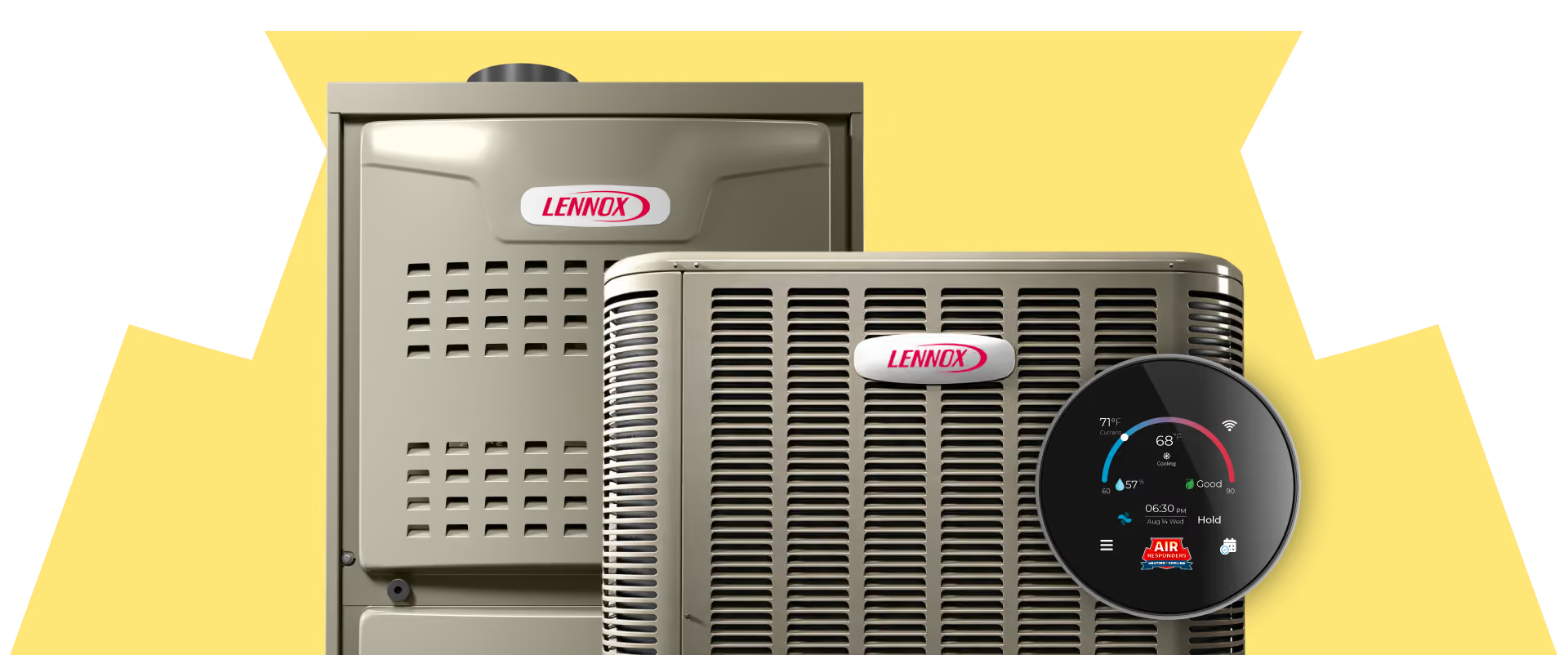
Uniformed technician, marked truck, shoe covers and drop cloths down before the first tool comes out. Daikin and Lennox equipment installed to manufacturer spec, with ductwork, drain and electrical corrected at the same time. Most installs finish in a single day.

An install is not finished when the unit turns on. We measure static pressure, airflow, refrigerant charge and temperature split, then hand you the readings with photos and video so you can see the system performing to spec.
Your warranty is registered for you the day we finish, labor coverage is in writing, and a manager calls after every job to confirm it was done right. If a number drifts, we come back and correct it.

Air Responders serves 40 cities within 50 miles of Austin, including Round Rock, Cedar Park, Georgetown, Pflugerville, Kyle, Buda, San Marcos, and New Braunfels. Most heating and cooling repairs handled same or next day.


More than a cooling-only system, because it runs year round. Two visits a year is the ideal — one before summer and one before winter — though an annual visit that tests both modes is a reasonable minimum.
The items that matter most are refrigerant charge, coil cleanliness, the reversing valve and the defrost cycle. A defrost fault often shows up only in heating mode, so a technician who tests only cooling will miss it entirely.
Not usually, but it does need to be adequate. Heat pumps move a larger volume of air at a lower temperature than a furnace does, so ductwork that was marginal before can become the limiting factor on performance.
We measure static pressure and inspect the duct system before quoting. If the ducts are the constraint we show you the readings and price that work separately, rather than installing a system that can't reach its ratings.
A heat pump costs more up front than a comparable cooling-only system, and less to run every winter that you'd otherwise be on electric heat. Where you land depends on which heat source you're replacing.
We show both systems side by side with efficiency, warranty and monthly payment, plus the running-cost difference over a ten-year horizon — so the decision is made on total cost rather than on the invoice.
Yes — identically. In cooling mode a heat pump is an air conditioner, running the same refrigeration cycle with the same components, and it's rated on the same SEER2 scale.
There's no summer penalty for choosing one. A properly sized variable-speed heat pump will hold a Texas house through August exactly as well as the equivalent straight-cool system, and often more comfortably because of how it manages humidity at part load.
In Central Texas it usually is. You're already replacing the outdoor unit and often the coil, so the incremental cost of choosing a heat pump is far smaller than buying one as a standalone project — and you get winter heating that costs much less to run than electric strips.
It makes less sense if you have cheap gas heat and a recent furnace. We price both against your own utility rates so it's a comparison, not a recommendation.
Mechanically they're nearly the same machine. Both move heat out of your house in summer; a heat pump adds a reversing valve so it can run the cycle backwards and move heat into the house in winter.
In cooling mode you would not be able to tell them apart — same compressor, same coils, same performance. The difference is entirely about what the system can do once the weather turns.
Heating, cooling, or air quality — book online in under a minute or call and talk to a real person. Same or next-day service across the Austin area.