

















We size the system to your home, not to the box that's in it now. Load calculations, duct and airflow measurements, and a full system evaluation come first. You get three options in writing, with the reasoning and the financing behind each.

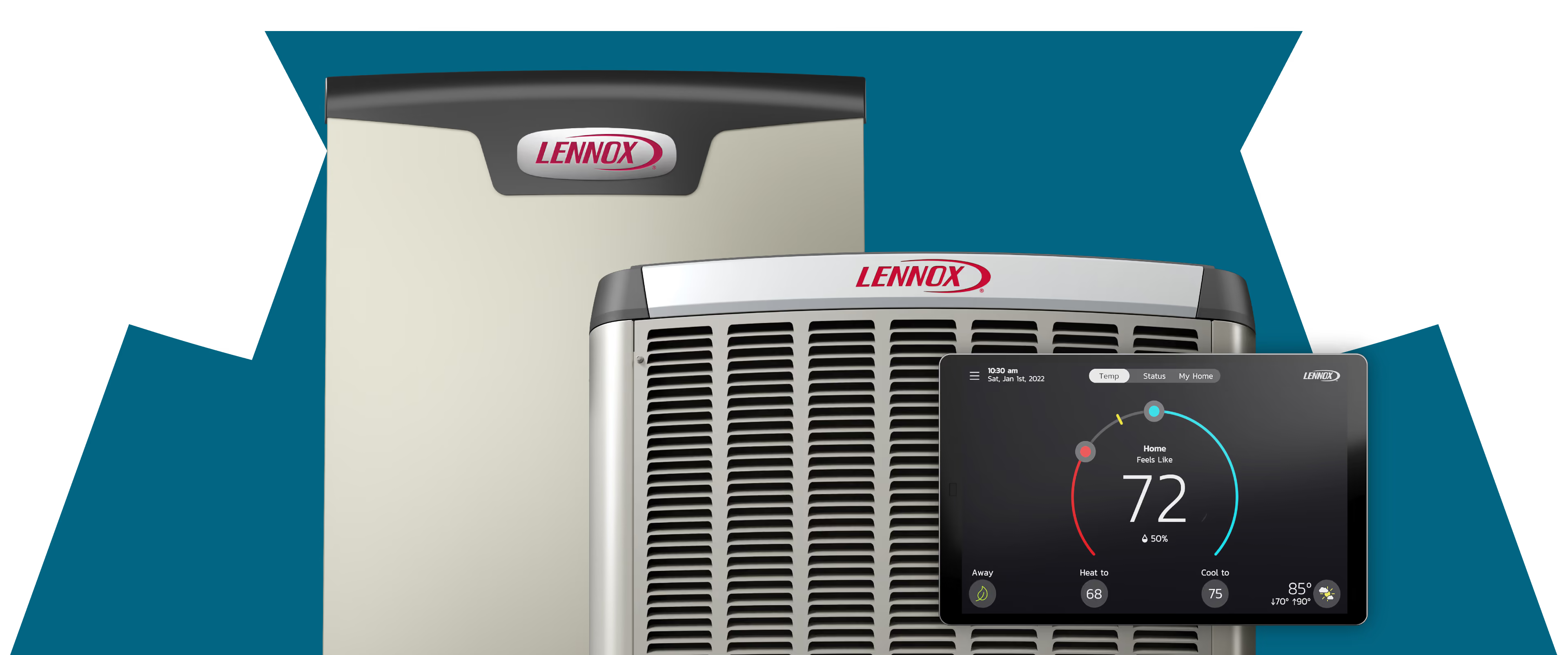
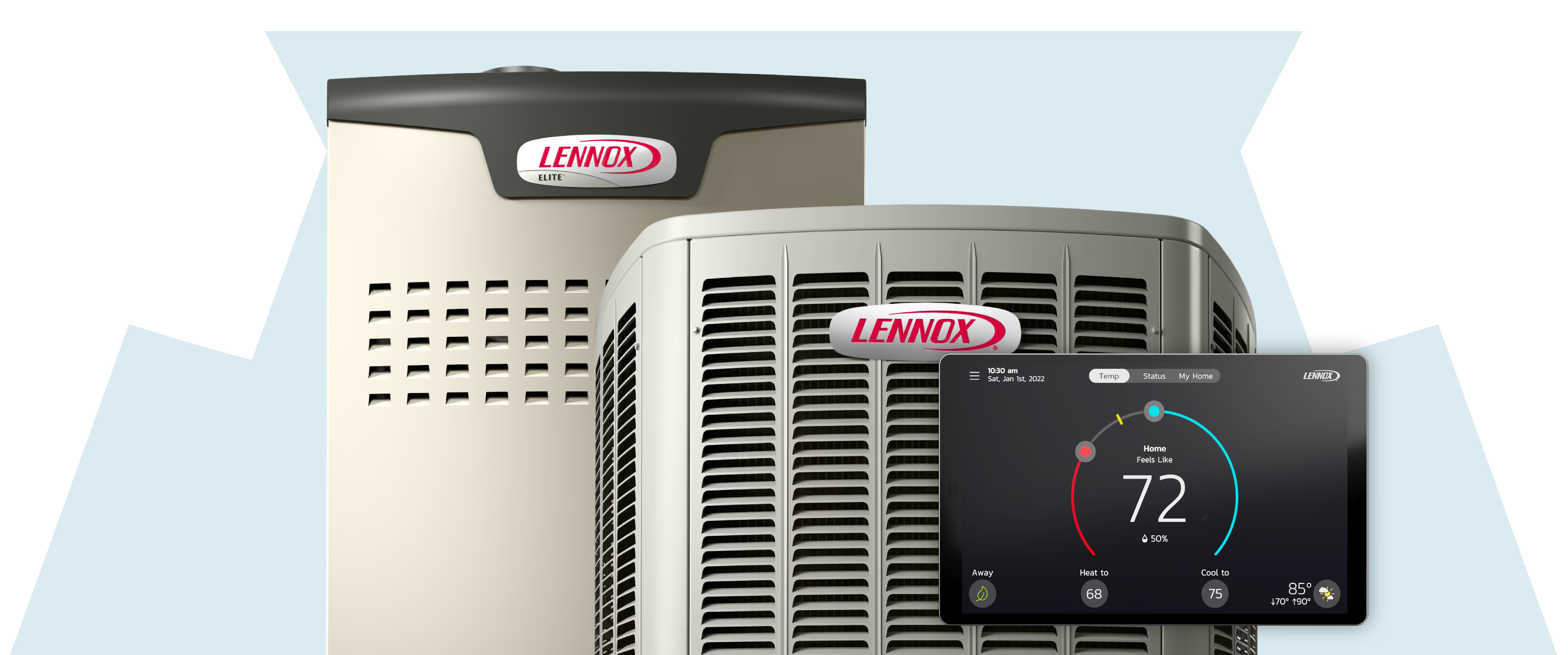
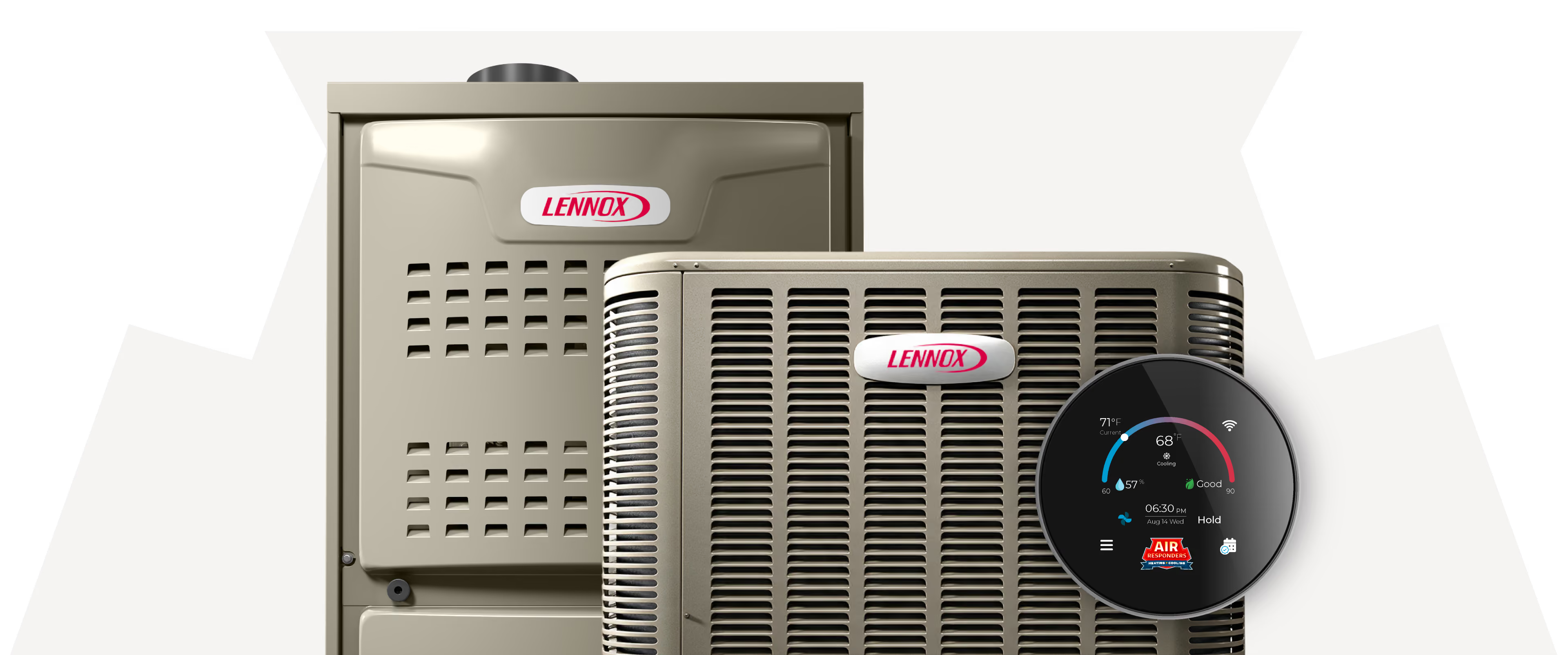
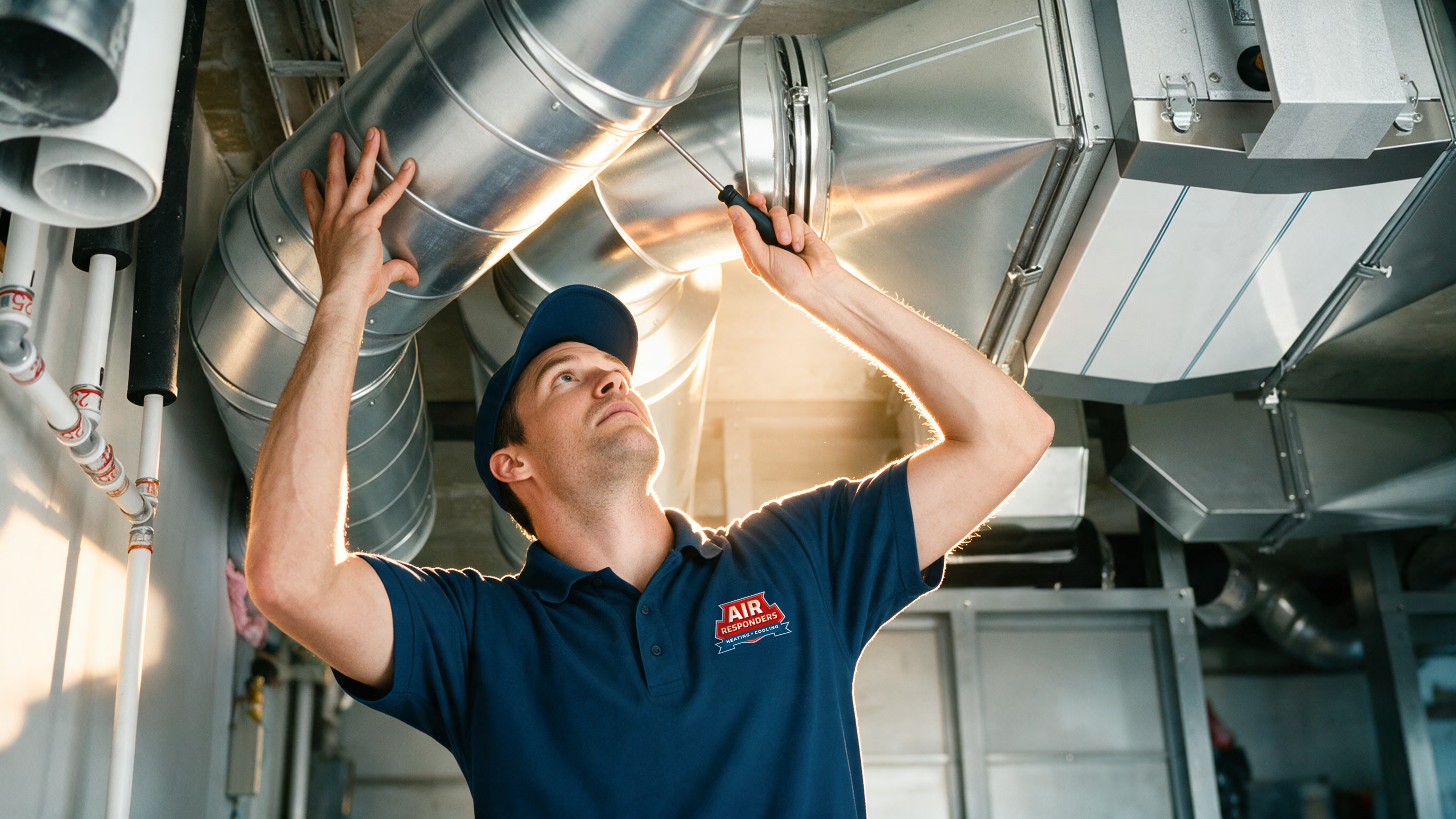
Uniformed technician, marked truck, shoe covers and drop cloths down before the first tool comes out. Daikin and Lennox equipment installed to manufacturer spec, with ductwork, drain and electrical corrected at the same time. Most installs finish in a single day.

An install is not finished when the unit turns on. We measure static pressure, airflow, refrigerant charge and temperature split, then hand you the readings with photos and video so you can see the system performing to spec.
Your warranty is registered for you the day we finish, labor coverage is in writing, and a manager calls after every job to confirm it was done right. If a number drifts, we come back and correct it.
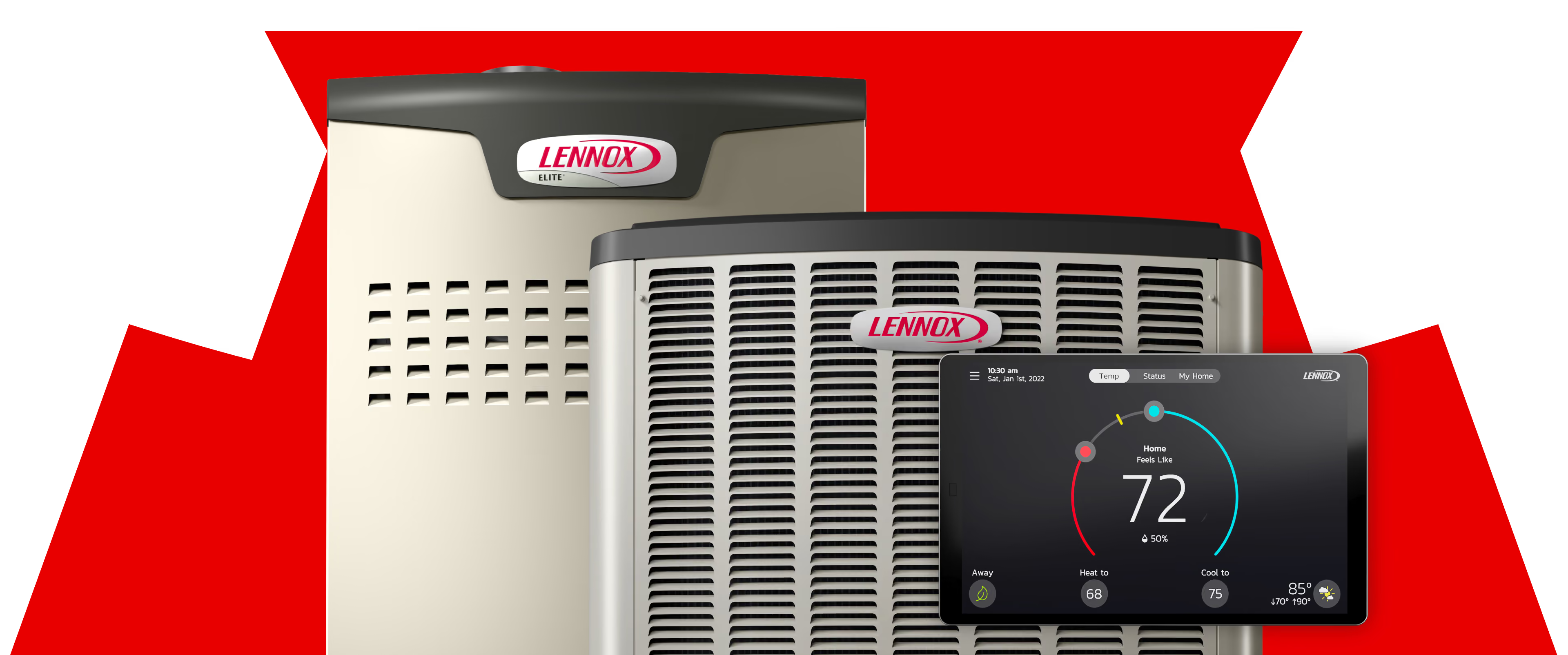

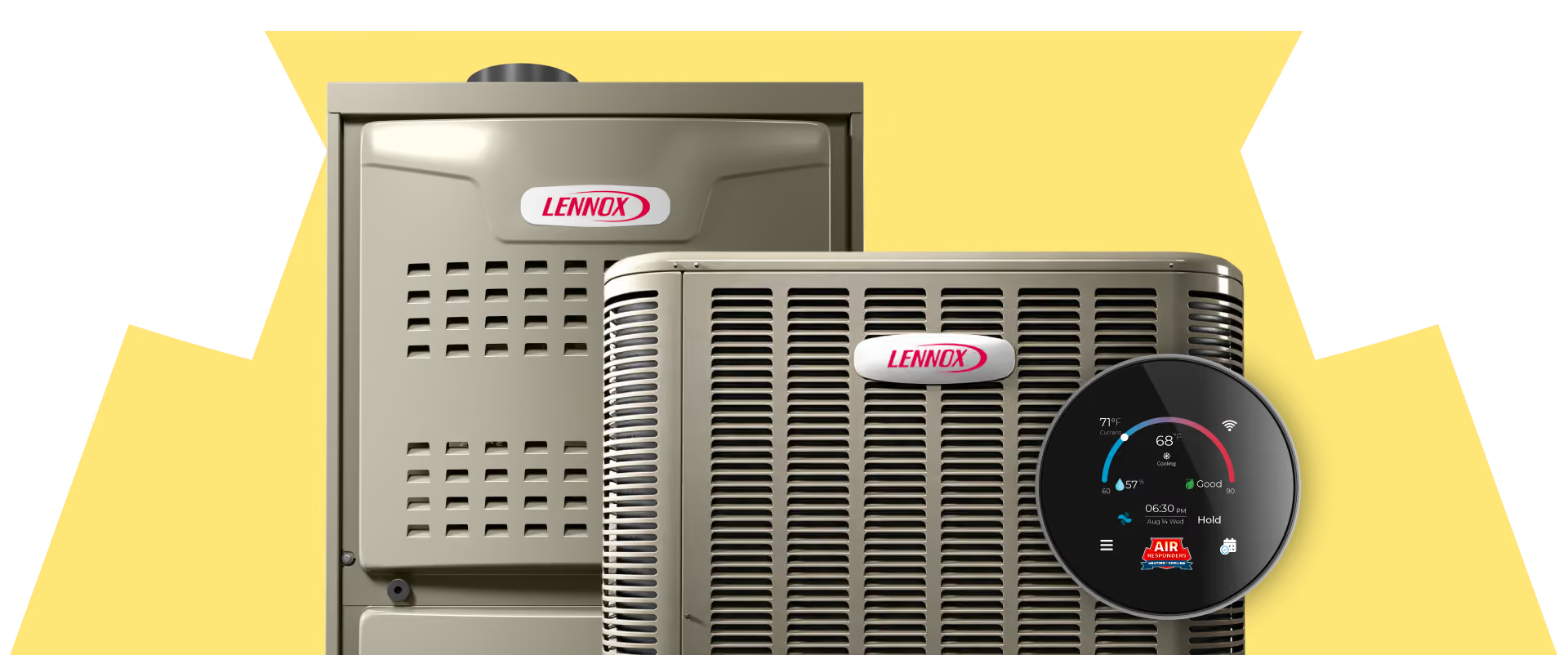
Most Austin homeowners are quoted $8,000–$12,000 up front for a new furnace. Ours starts at $125 a month — 0% interest, and no payments for 18 months.
Air Responders serves 40 cities within 50 miles of Austin, including Round Rock, Cedar Park, Georgetown, Pflugerville, Kyle, Buda, San Marcos, and New Braunfels. Most heating and cooling repairs handled same or next day.


A deep-pleat media cabinet typically runs six to twelve months, compared with 30 to 60 days for a 1-inch filter — which is one of the practical arguments for the cabinet in the first place.
Electronic purifiers need periodic cell cleaning rather than filter replacement. Either way we check and service it at your annual visit, so it doesn't quietly become a restriction instead of a benefit.
Good filtration captures a large share of smoke particulate, which is fine enough that a standard 1-inch filter does very little with it. A deep-pleat media cabinet makes a noticeable difference on smoky days.
Smoke also carries gases and odours that particle filters don't remove; that's where activated carbon or an electronic purifier earns its place. We'll tell you which part of the problem each option actually addresses.
It helps, but in many Austin homes dust is a symptom rather than the problem. Leaking return ducts pull attic air — and everything in it — straight into the system, and no filter fully compensates for that.
If dust returns within days of cleaning, we test the duct system first. Sealing the leaks and then adding proper filtration works far better than filtration alone, and often costs less than repeated attempts at the latter.
Higher isn't automatically better, because a denser filter restricts airflow, and a system starved of air cools poorly and can freeze its coil. What matters is matching filtration to the static pressure your equipment can tolerate.
The reliable way to get high filtration without the penalty is a deep-pleat media cabinet: far more surface area, so it captures more while restricting less. We measure static pressure before recommending anything.
For the house as a whole, yes. A whole-home system treats every cubic foot of air that passes through your HVAC equipment, which in an Austin summer is a great deal of air, and it does it without a unit humming in the corner of each room.
Portable units still have a place — a bedroom for someone with acute sensitivity, say. They're a supplement to whole-home filtration rather than a substitute for it.
For cedar season the effective approach is whole-home media filtration — a deep-pleat cabinet sized to your system — because it treats all the air in the house every time the blower runs, rather than one room at a time.
Cedar pollen is small and abundant from December through February, so filter surface area matters more than headline MERV numbers. A larger cabinet at moderate MERV usually outperforms a thin high-MERV filter that chokes the system.
Heating, cooling, or air quality — book online in under a minute or call and talk to a real person. Same or next-day service across the Austin area.