

















We size the system to your home, not to the box that's in it now. Load calculations, duct and airflow measurements, and a full system evaluation come first. You get three options in writing, with the reasoning and the financing behind each.

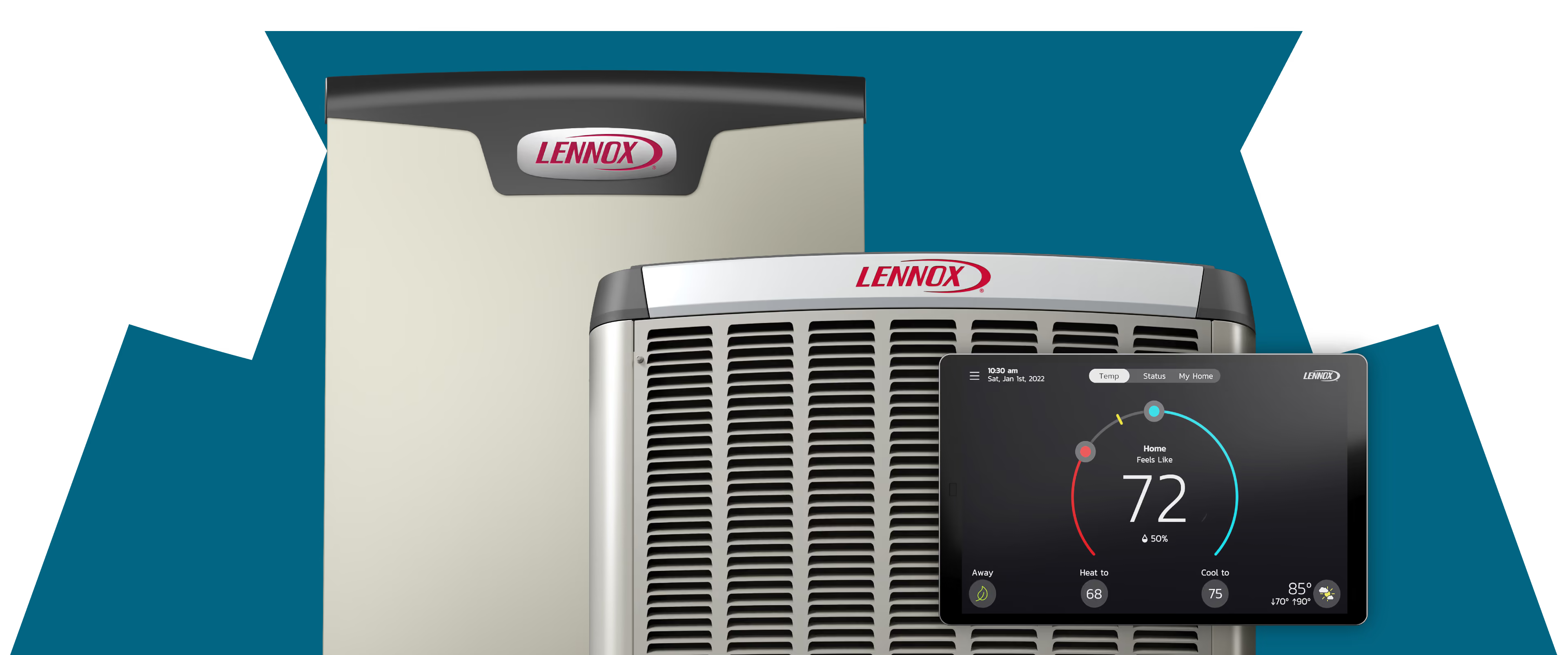
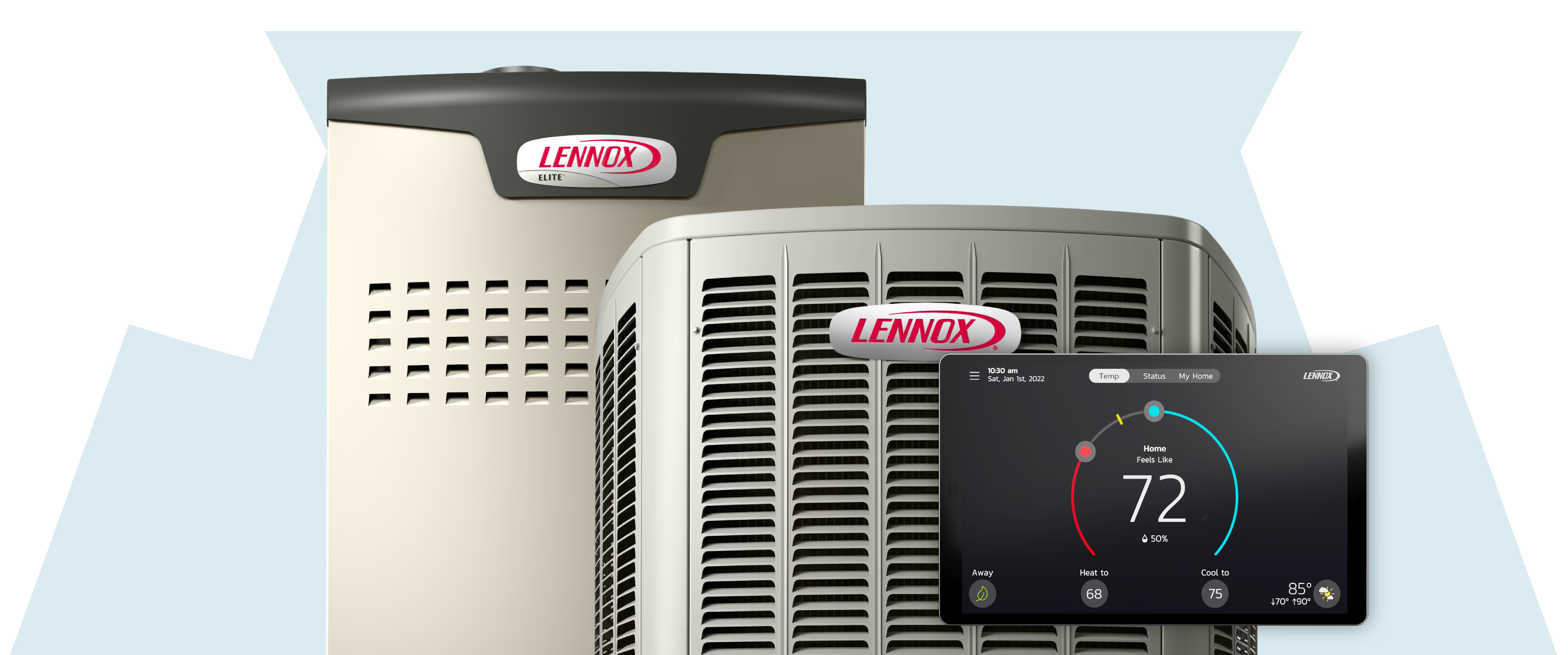
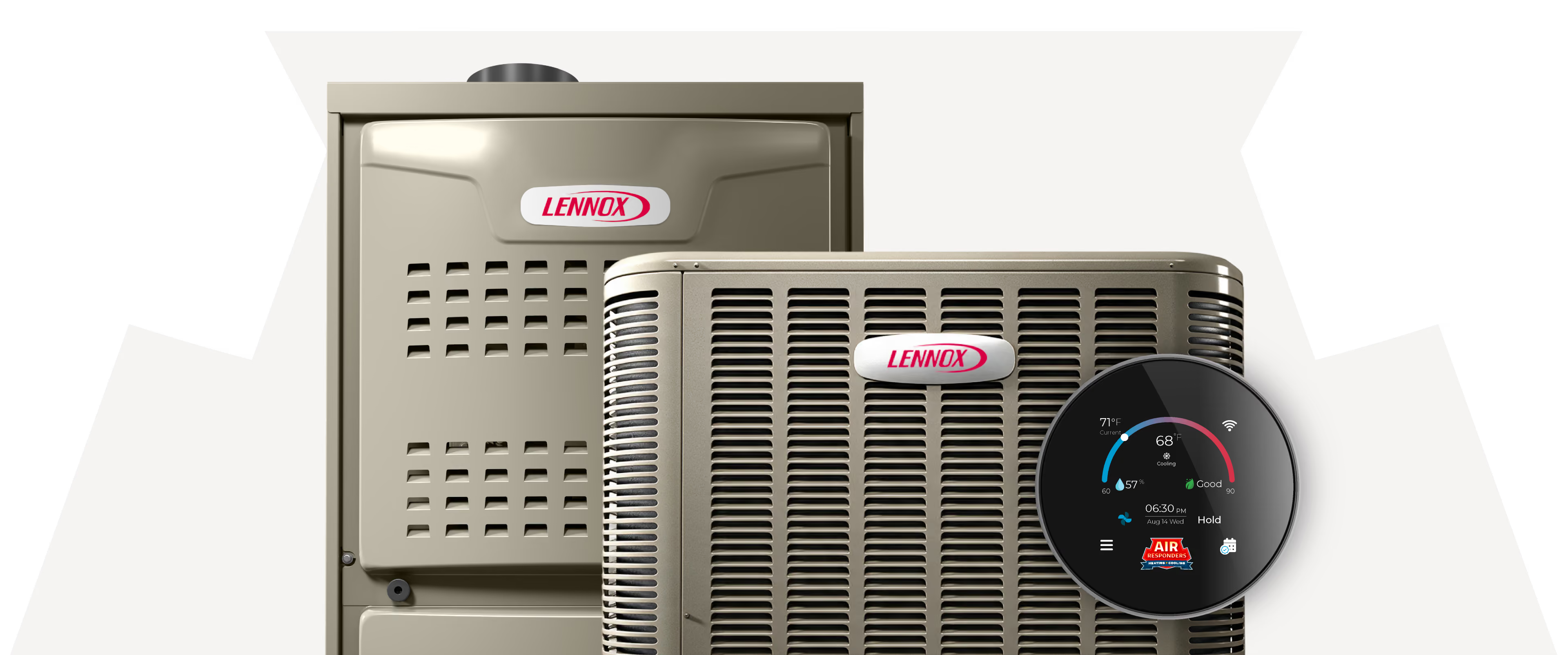
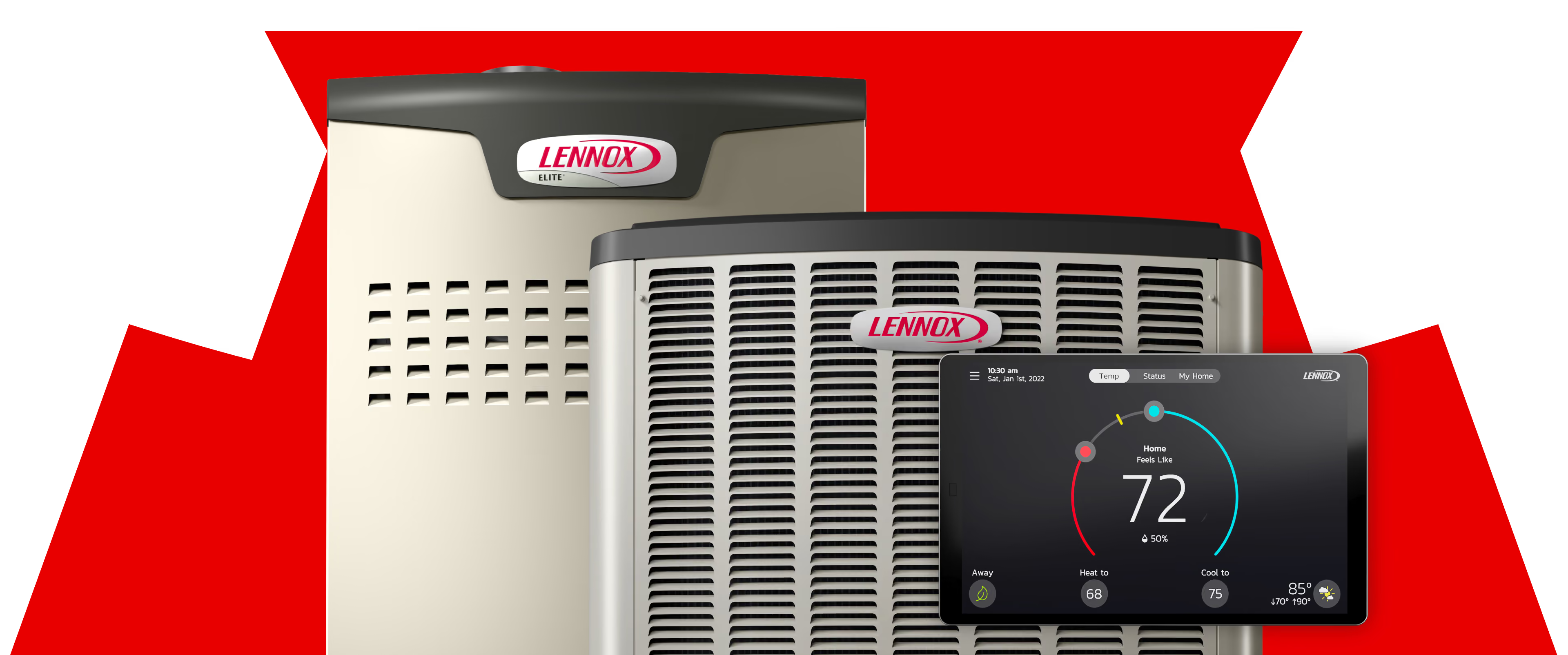
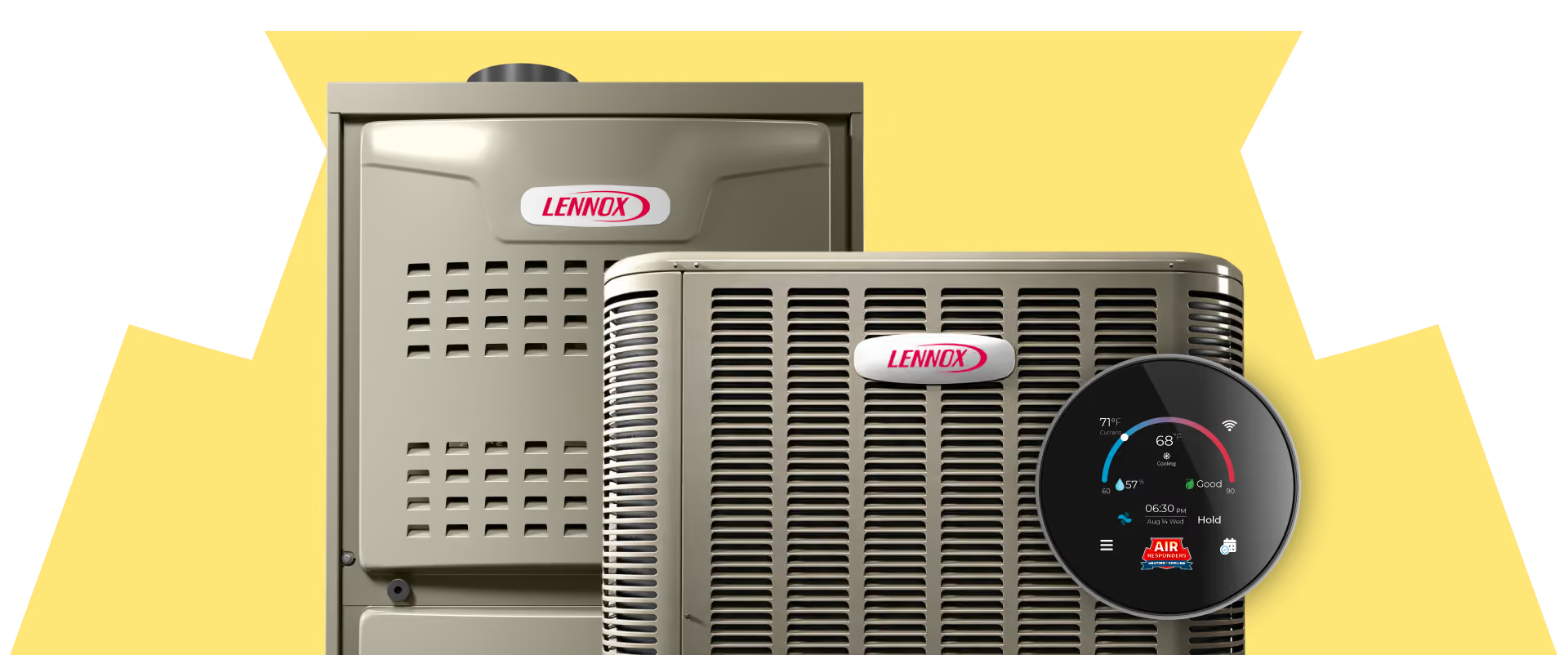
Uniformed technician, marked truck, shoe covers and drop cloths down before the first tool comes out. Daikin and Lennox equipment installed to manufacturer spec, with ductwork, drain and electrical corrected at the same time. Most installs finish in a single day.

An install is not finished when the unit turns on. We measure static pressure, airflow, refrigerant charge and temperature split, then hand you the readings with photos and video so you can see the system performing to spec.
Your warranty is registered for you the day we finish, labor coverage is in writing, and a manager calls after every job to confirm it was done right. If a number drifts, we come back and correct it.

Most Austin homeowners are quoted $8,000–$12,000 up front for a new furnace. Ours starts at $125 a month — 0% interest, and no payments for 18 months.
Air Responders serves 40 cities within 50 miles of Austin, including Round Rock, Cedar Park, Georgetown, Pflugerville, Kyle, Buda, San Marcos, and New Braunfels. Most heating and cooling repairs handled same or next day.


Keeping indoor humidity below roughly 50% removes the conditions mould and dust mites need to thrive, which is a meaningful part of managing indoor allergens — and it also protects wood floors, cabinetry and musical instruments.
It isn't a treatment for existing mould growth, and it doesn't replace filtration for pollen. If you have visible mould or a musty smell in the air handler, we'll look at what's causing the moisture first.
It ties into your existing duct system, usually near the air handler in the attic or a mechanical closet, with its own condensate drain and a humidistat that runs it independently of the cooling cycle.
That independence is the point: it can remove moisture on a mild, muggy day when the air conditioner barely runs — which is precisely when an Austin house tends to feel worst.
Often, indirectly. Drier air feels cooler, so most households find they can raise the thermostat two or three degrees and still feel more comfortable — and in an Austin summer, each degree matters on the bill.
The dehumidifier uses energy of its own, so it isn't a straight saving. The honest framing is better comfort at a higher setpoint, with the cost roughly offsetting rather than a guaranteed reduction.
For most of the year, a dehumidifier. Austin's climate is humid for eight or nine months, and controlling moisture is what makes a house comfortable at a higher, cheaper thermostat setting.
Humidifiers have a narrower use here — mainly homes on electric or gas heat that get uncomfortably dry through a few winter weeks. We measure before recommending either, rather than assuming which problem you have.
The usual cause is an oversized air conditioner. Dehumidification happens while the coil is cold and air keeps passing over it, so a system that satisfies the thermostat in short bursts never runs long enough to pull much moisture out.
Leaking return ducts drawing humid attic air are the other frequent culprit. We log humidity across the day and check cycle length before recommending equipment.
Between about 40 and 50% relative humidity is the range we design for. Below that the air feels dry and static builds; above roughly 55% the house feels clammy at any thermostat setting and conditions start to favour mould and dust mites.
Most Austin homes sit too high for much of the year, which is why a house at 74 degrees and 60% humidity feels worse than the same house at 76 degrees and 45%.
Heating, cooling, or air quality — book online in under a minute or call and talk to a real person. Same or next-day service across the Austin area.